the table is prepared for you
poetic conversations with ancestors over tearesidency exhibition at Goodyear Arts (2025)
the table is prepared for you envisioned a series of imagined poetic conversations with myself and four of my maternal great grandmothers over tea. Through handcrafted tea blends and poetry, I explored the women's fears, dreams, and experiences, offering a quiet space to reflect on what they left behind. Moving beyond traditional research questions, I asked what rituals these women engaged in to support their own happiness. During this residency, I explored memory through found objects, oral histories, aroma, and taste, crafting an intimate, multi-sensory experience. I used tea to ground these ephemeral conversations as an offering of gratitude to my female ancestors and as an invitation for others to join these sacred conversations.
My Process
Working within the constraints of a six-week residency meant focusing my work on the most significant elements of my project, gathering information strategically, and making decisions quickly.
Week 1: Identify ancestors and conduct research
First I had to choose which ancestors to focus on. I considered how many poems I could write given my timeline, which ancestors I was already relatlvely familiar with, and what themes might bring all of their experiences together.
I also wanted to display photographs of these individuals. Would I be able to adequately convey the experiences of those whom I didn't have photographs for? Could I use found objects to acknowledge the visual gaps?
I chose two great-grandmothers and two 2x-great grandmothers. I already knew I would focus on one 2x-great grandmother, Minnie Carrie Ann McDonnell Stewart. I had researched her life extensively and had plenty of material to pull from, including photos, interviews, and even audio of her speaking. I also chose Carrie's daughter, Callie Stewart Lawrence. Carrie and Callie were both on my maternal grandfather's side. Given the overlaps and distinct differences in their experiences, I chose their respective counterparts on my maternal grandmother's side: my 2x-great grandmother, Annie Lewis, and her daughter, Susie Mae Warren Green.
Since these women were not too far removed from the present day, I could also talk to relatives who had first-hand experiences with them.
Week 2-3: Research, write and revise poems
Now that I had my four women, I sketched out potential themes, parallels, and contrasts in their personalities, experiences, and the stories living relatives told about them. I mapped out the information I knew, identified overlaps, and then dug deeper. Up until that point, the majority of my research had focused on life events and family stories. But more abstract, emotionally-centered questions helped ground the essences of these women.
After listening to oral history interviews I had conducted, I reached out to relatives and asked new questions such as:
- How did your mother/grandmother make you feel?
- What did you look forward to when visiting her?
- Did she have any hobbies, interests, habits, or rituals?
- What did she look forward to? What frustrated her?
Writing the poems
Several themes began emerging, including: the nature of mother/daughter relationships, migrating from the South to the North, having husbands who worked in industry, gardening, etc. I explored these themes more fully, tapping into place, emotion, and personality. I remained inquisitive throughout my writing process, writing my poems from a place of curiosity. I chose to embrace any gaps in their experiences that I encountered.
I started with phrases that stuck with me after my interviews and built some poems around those phrases, inquiring with my own responses. For other poems, I was more direct with my questioning: What did I wish I could ask these women, but could not?
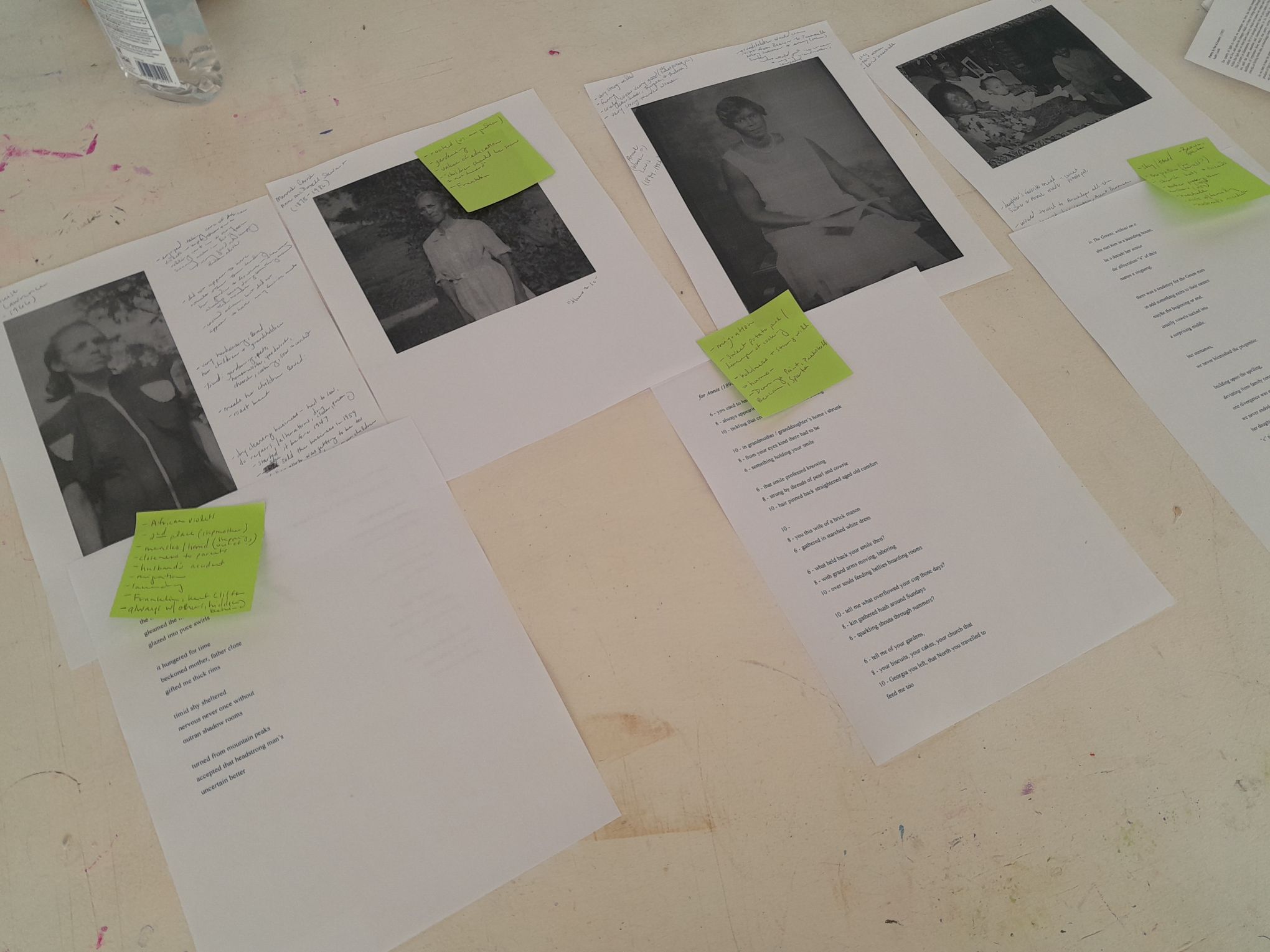
Week 4-5: Assemble tea blends and Print Portraits
The Tea Blends
One of the values of using tea as a vehicle was that it also would help me exude a sense of place through intentional choices about its ingredients. For each of my grandmothers, I created tea blends that were a nod to their rituals and what they passed onto others. These would be teas that I would have served them if they were still living.
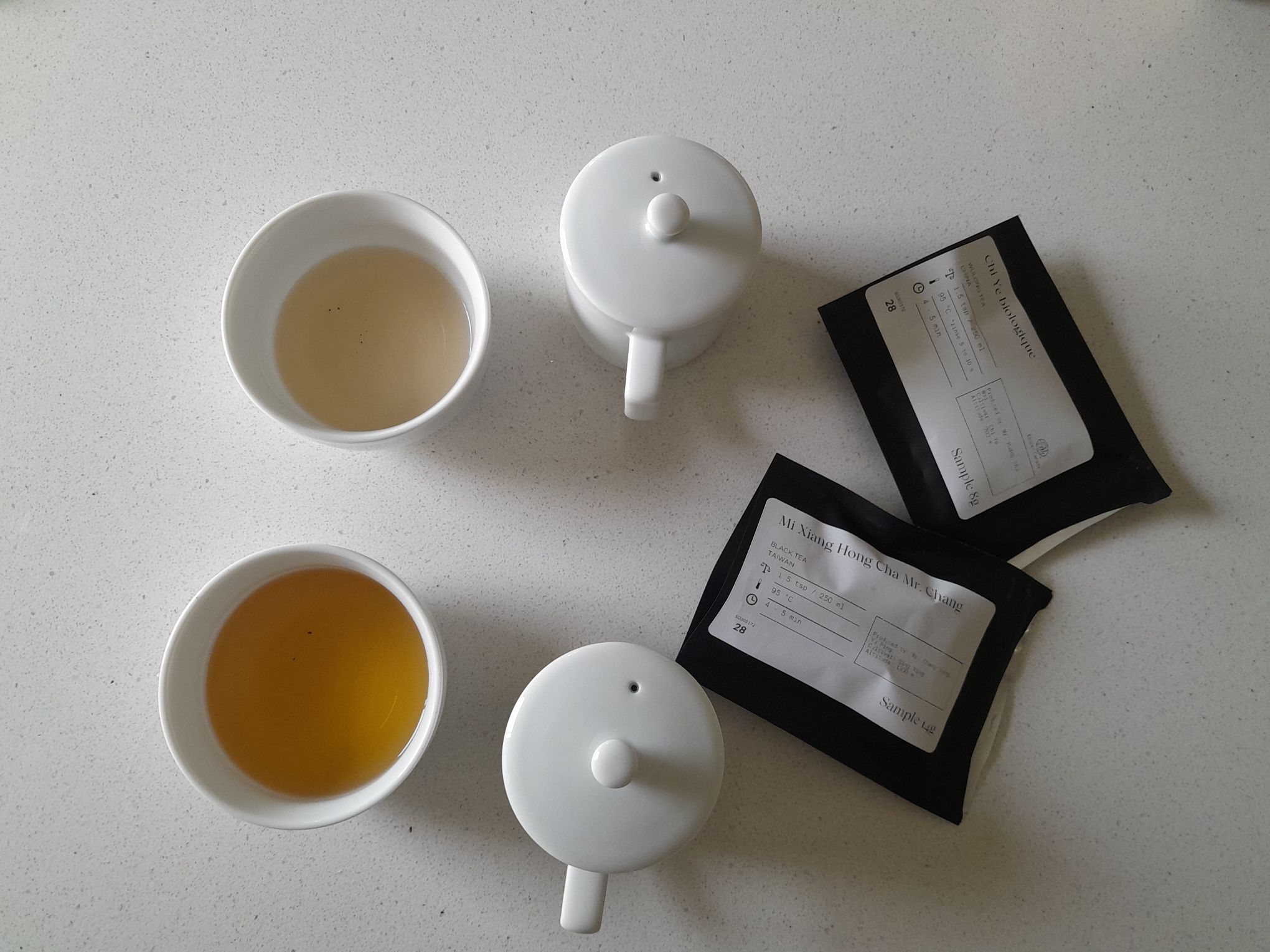
I started by crafting the ideas for the blends based on the stories I heard and the rituals that were called out:
- Great-Great Grandma Carrie would often ask her grandchildren to pick fruit for various baked goods, including Blackberry Cobbler. I would lean into the feeling of eating warm blackberry cobbler, while nodding to her relationship with gardening.
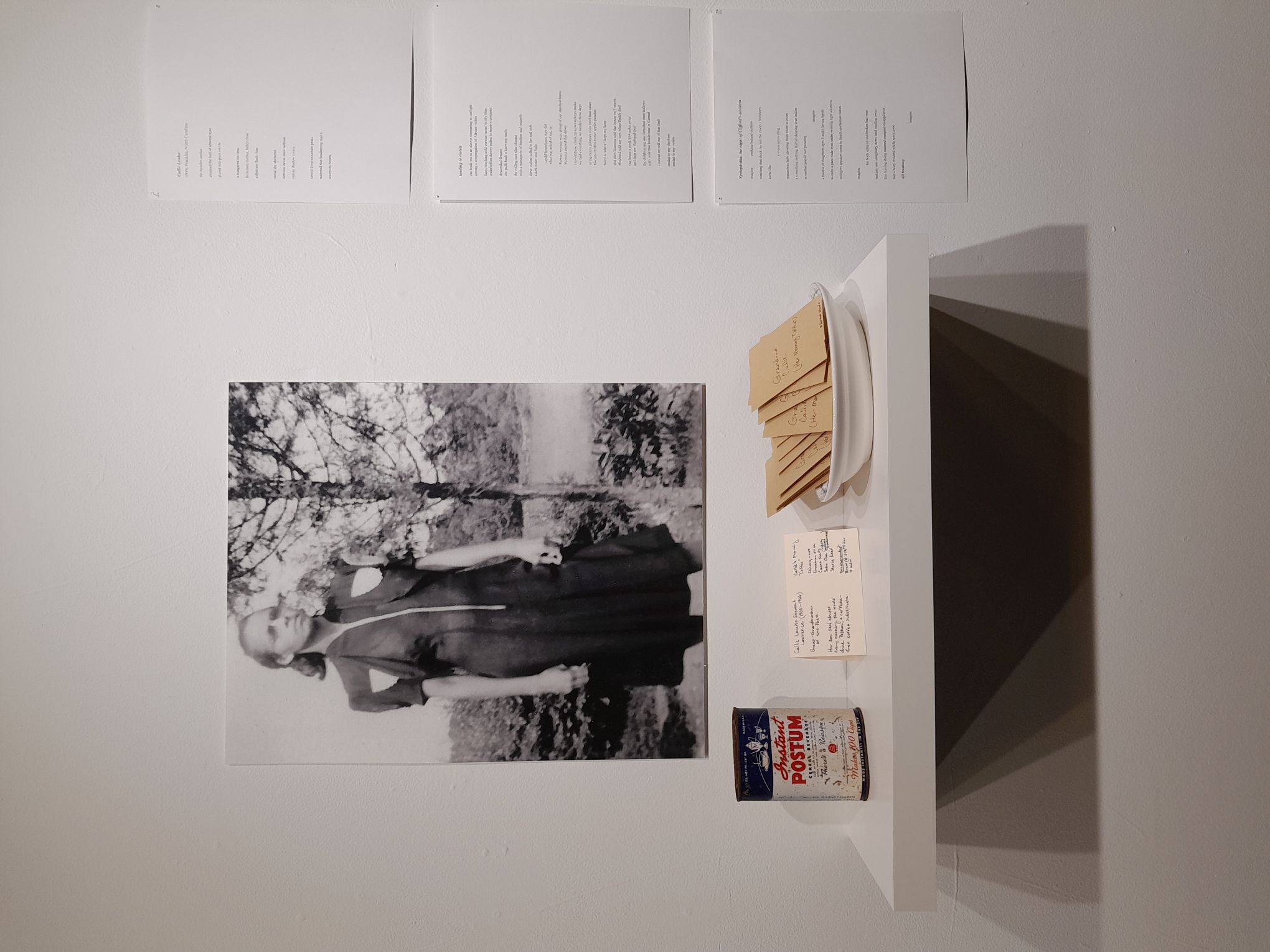
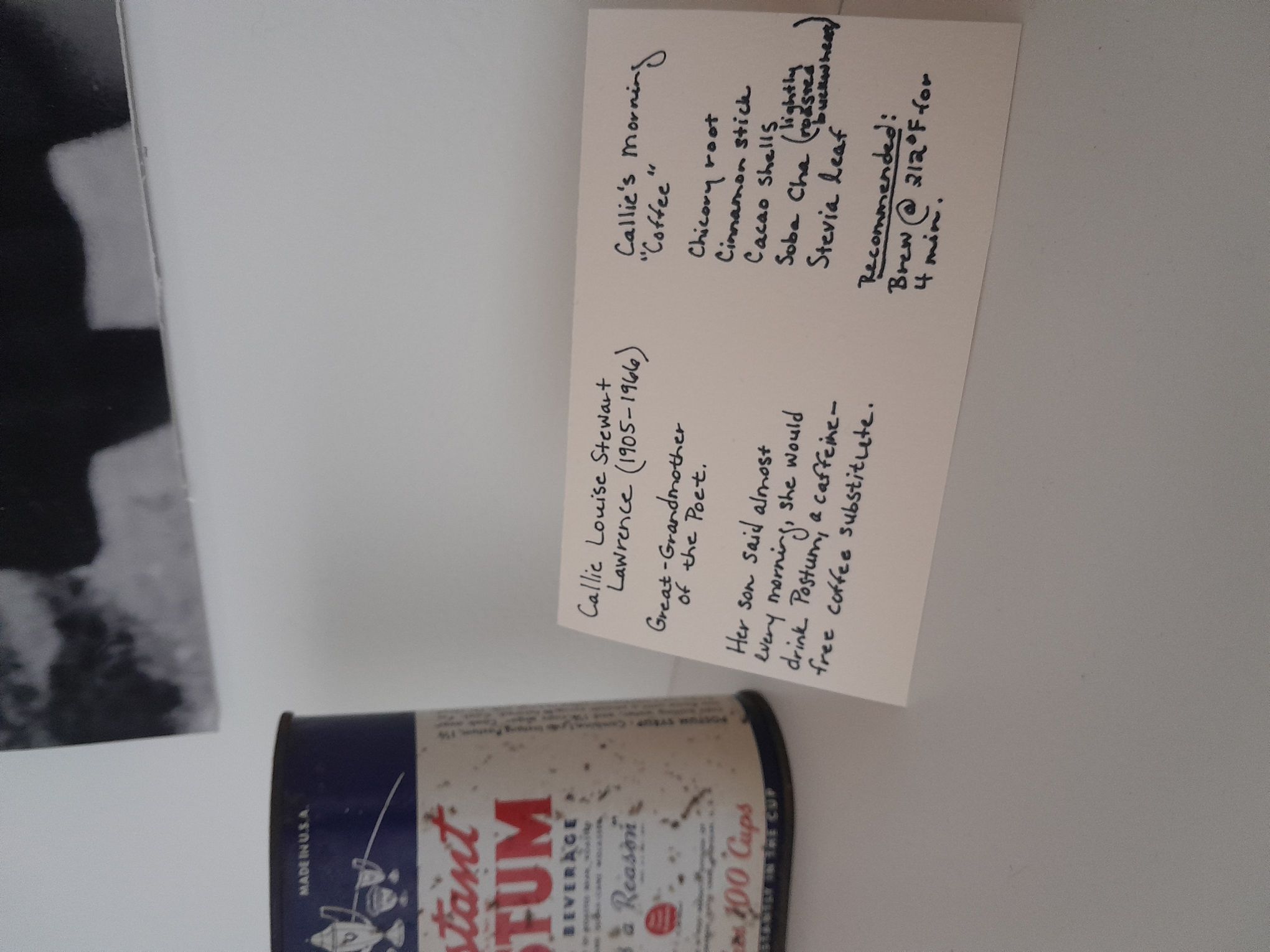
- Great Grandma Callie would often drink Postum to start her day. Her blend would be an herbal spin on her morning cup, with elevated, natural ingredients to support her.
- Great-Great Grandma Annie's grandchildren raved about her sweet potato pie. What would it look like to create this pie for her, making it even more delicious and memorable? Her Sweet Potato Pie blend would be soothing, comforting, and familiar.
- Great Grandma Susie's egg custard pie was legendary in our family. I would aim to recreate the nostalgic flavors, while upgrading certain ingredients to enhance the distinct vanilla and lemon flavors.
Next, I taste-tested tea and dried spices with tasting notes and aromas that were suitable for each blend. For example, one of the black teas, a Hong Cha, had "biscuity" and "fruity" notes that would support the "Blackberry Cobbler" blend. From there, I measured and tasted various combinations until I could approximate the taste of each idea.
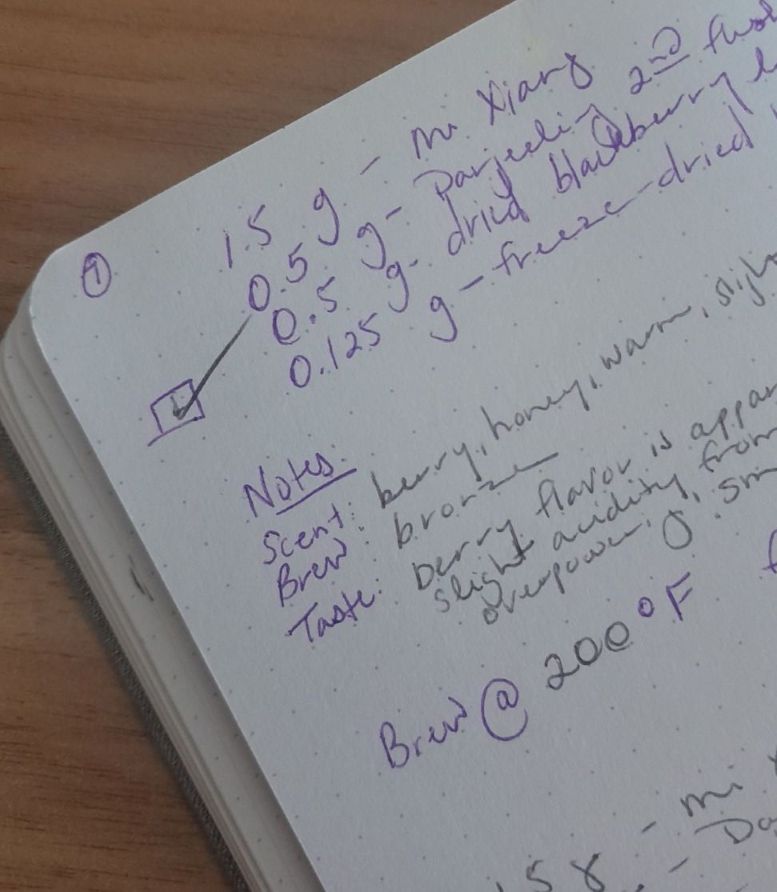
After making Susie's egg custard pie from our family's recipe, I created a series of blend trials to approximate the flavors of lemon, nutmeg, vanilla, and pie crust. While the inclusions were quite straightforward (ie. cinnamon, nutmeg, vanilla bean, etc.), finding the right base for the tea was challenging: black teas were too robust and surprisingly, in the end, a green tea helped balance all of the flavors, resulting in a smooth, almost creamy brew.
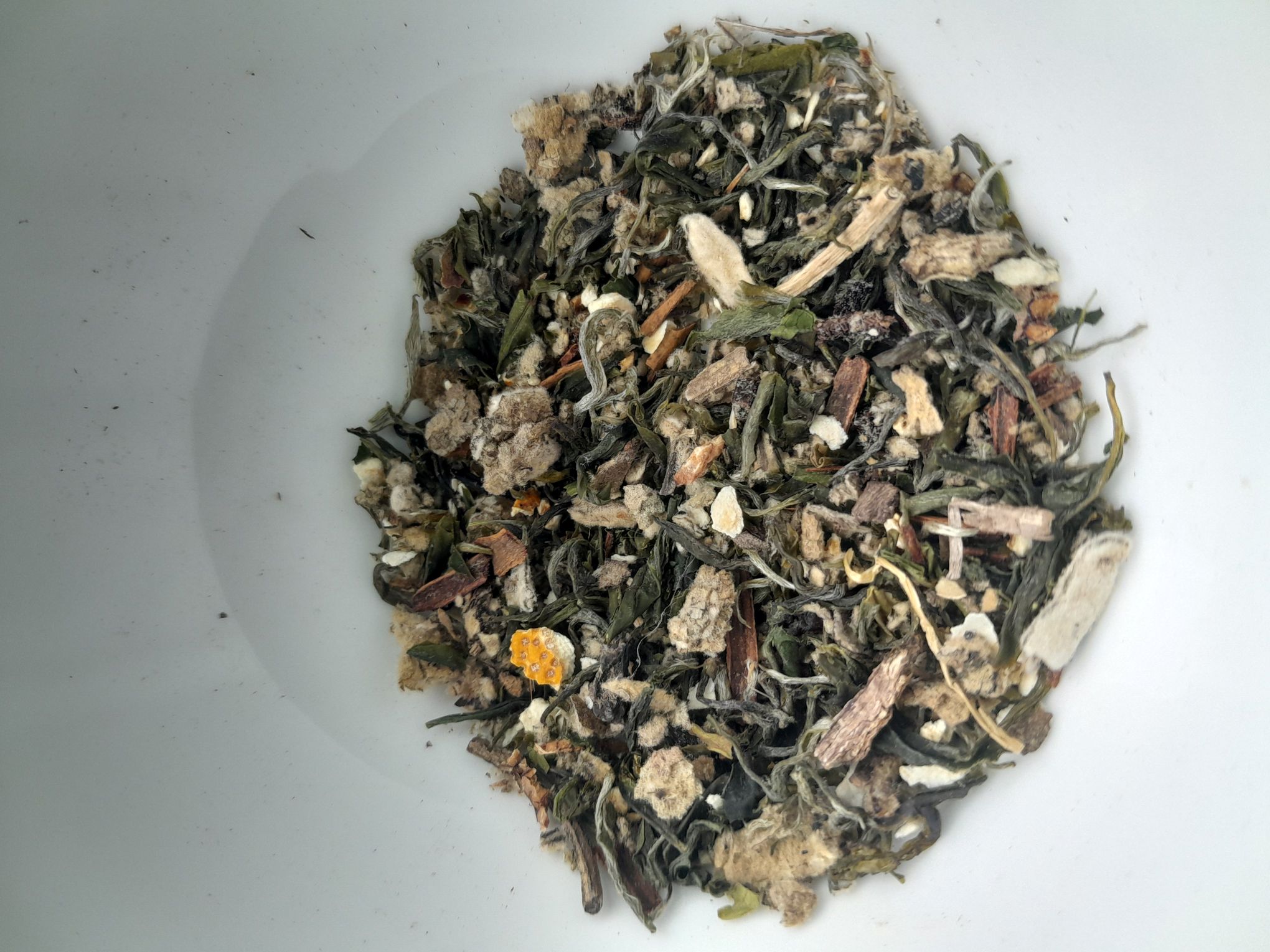
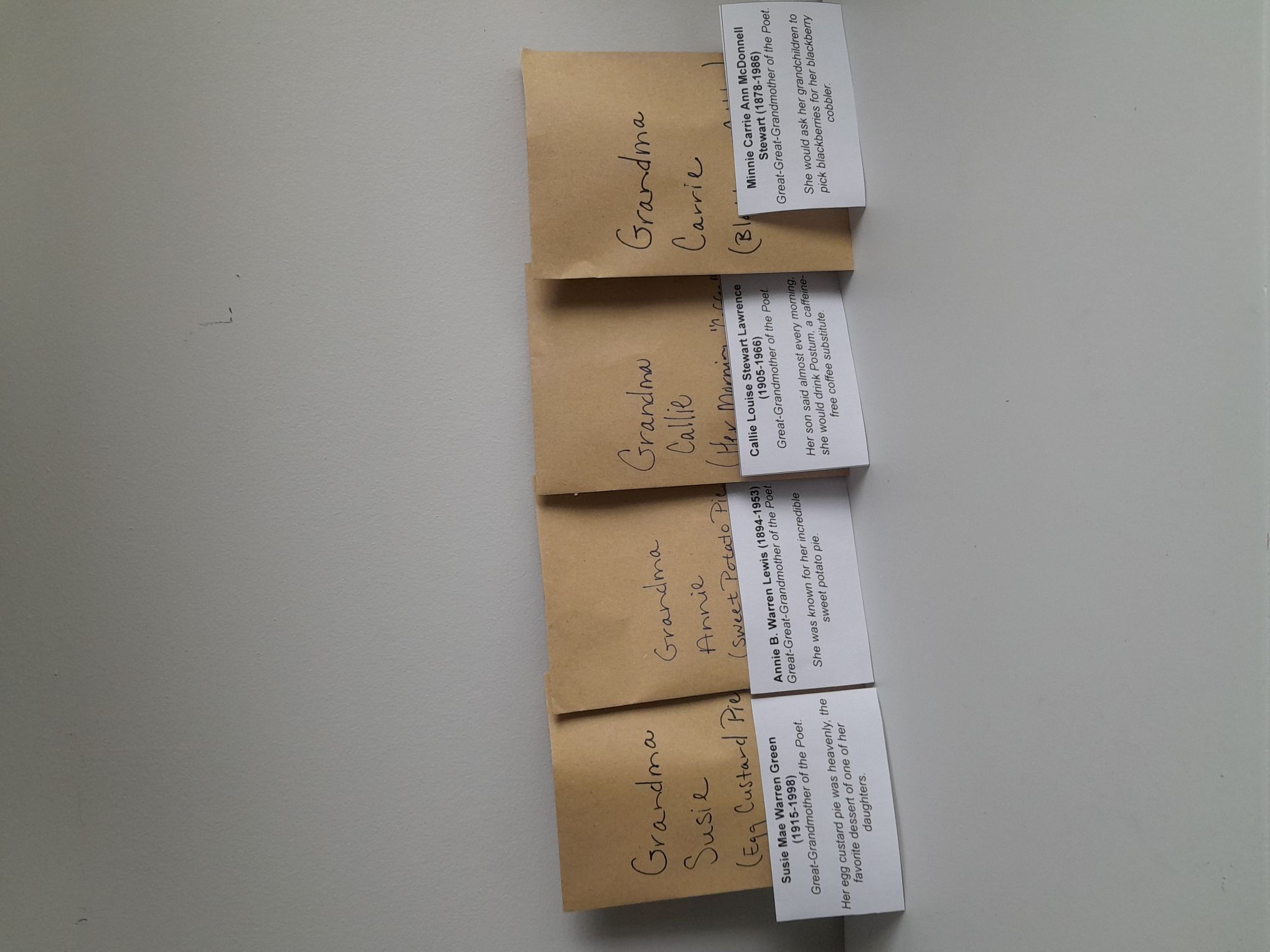
After multiple trials, I ended up with three tea blends and one herbal blend. Each blend represented the aroma, taste, and essence of each imagined conversation.
The Portraits
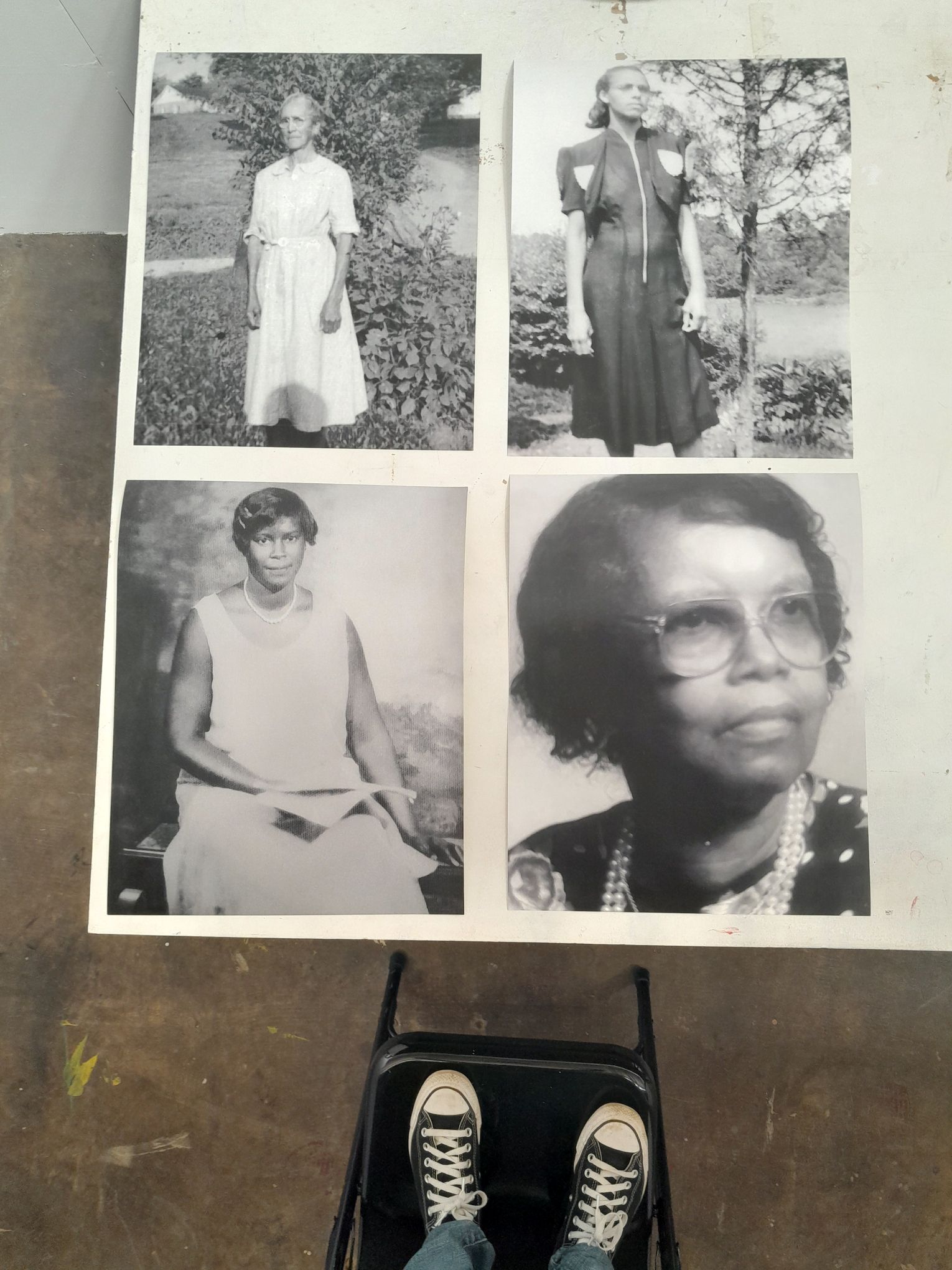
The images of my grandmothers came from family archives. Although I initially wanted the portait subjects to be similar in posture, for Callie and Annie, I only had two photos where they appeared by themselves. I choose to display the images in black and white to give the collection a cohesive, timeless aesthetic.
For the portraits, I went with 16" x 20" Hahnemuhle German Etching paper. I wanted paper that was textural and that could also possibly withstand some manipulation. I explored methods of staining the paper with tea and other techniques, but did not enact them due to time constraints. I went without frames to ensure the portraits were approachable and less formal.
Week 6: Assemble the works
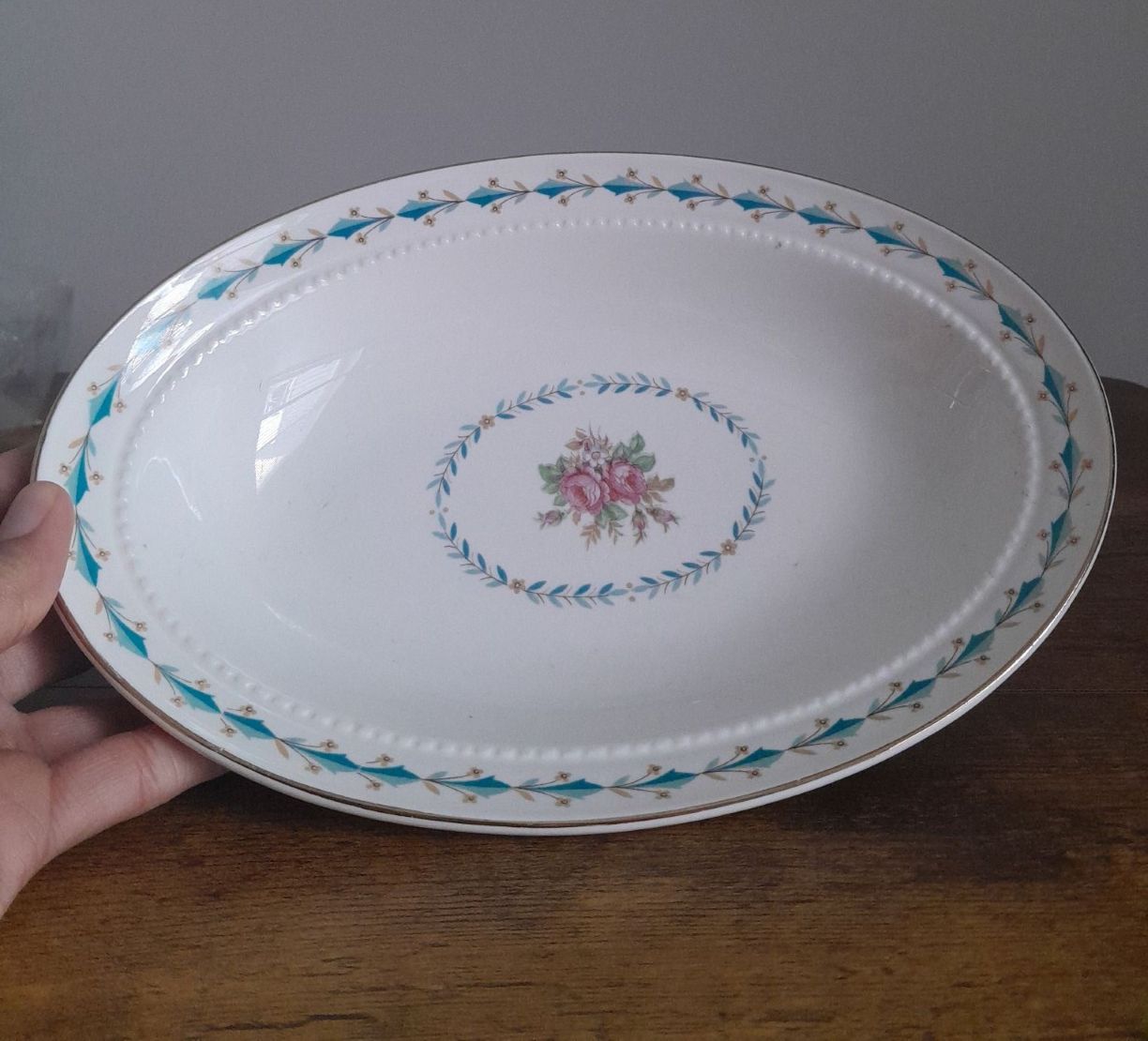
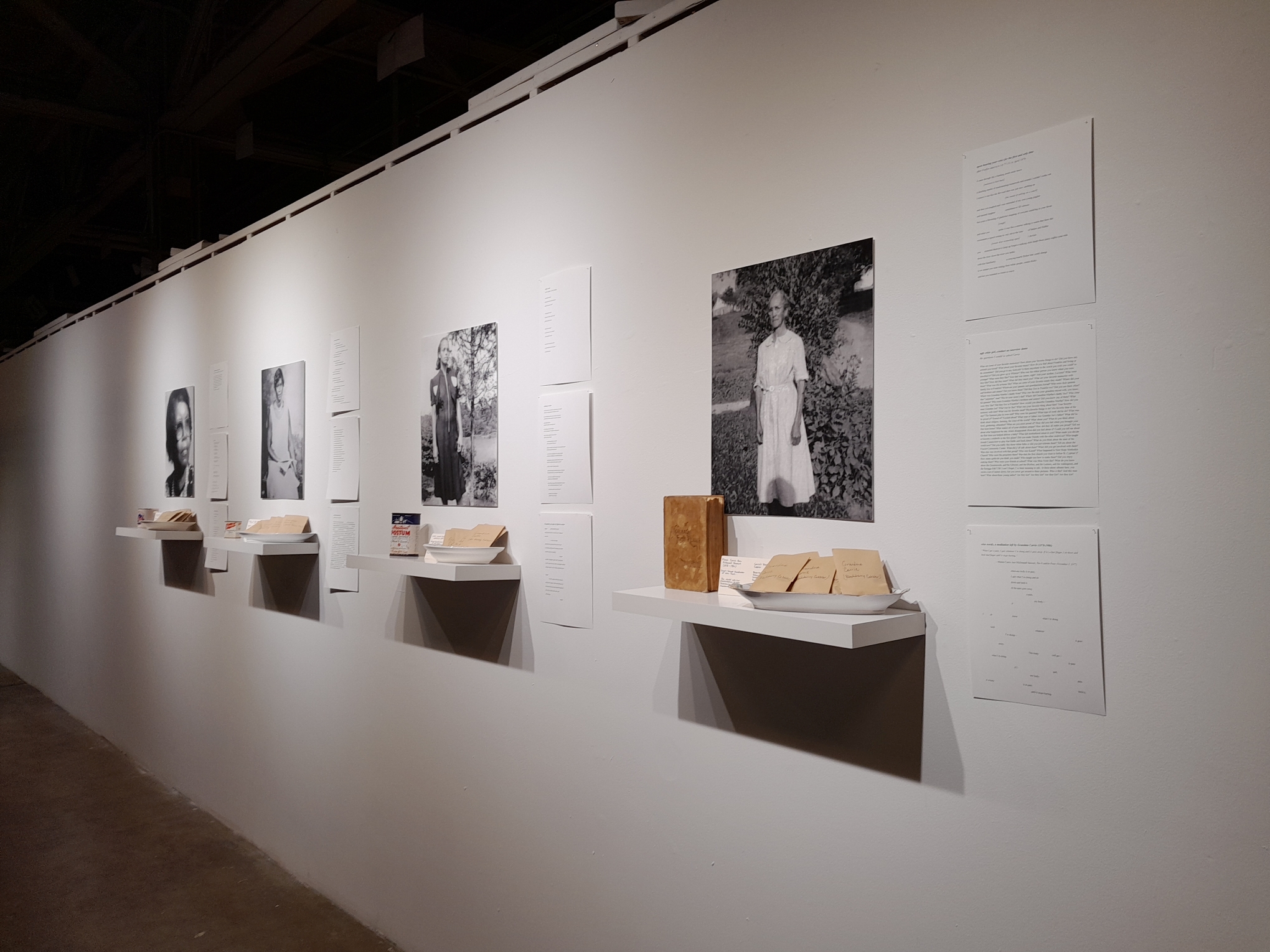
Each portrait was hung above a shelf holding relevant found objects and the tea packets. To the right of each portrait, I included three poems, representing a fuller conversation between myself and each woman. I found vintage dishes at a local thrift shop and used them to hold the tea packets, crafting an intimate air reminiscent of an old kitchen. Those who visited the gallery had the opportunity to use a provided hot water station to steep a tea of their choice or take a bag home for later.
By engaging with this exhibition, I hoped viewers would feel a sense of connectedness to these individuals and would come away with a deeper warmth and curiosity for their own ancestors.